
Finished Beds That Signal an Actively Maintained Property
Mulch installation in Lakeland for planting beds that have thinned out, dried down, or lost their defined edge lines
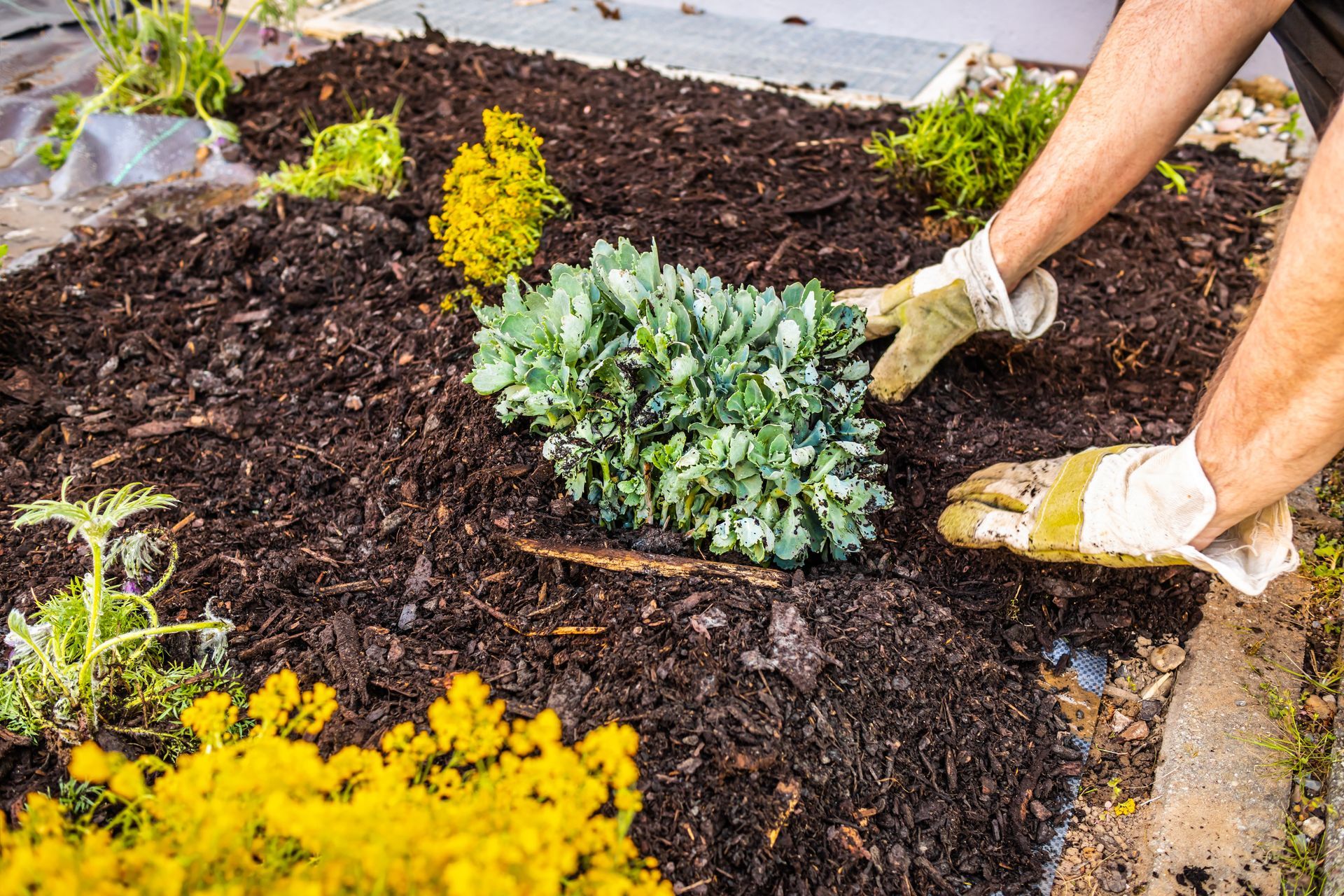
Polk County's intense sun and sandy soil dry out mulch beds within weeks of a light application, leaving roots exposed and weeds with the opening they need to establish before the next rainfall. C & E Landscaping Solutions delivers and installs premium mulch across Lakeland and central Polk County, measuring every bed, calculating the exact cubic yardage required, and spreading to the two-to-three-inch depth where weed suppression actually functions. The crew handles measurement, delivery, spreading, and edging cleanup in a single visit—no coordination between a delivery driver and a separate installation crew.
Installation follows a specific sequence that determines whether the finished product holds its depth and edge definition over time. Beds are measured first so material is not ordered short or delivered in excess. Mulch is spread to a consistent depth across the full bed rather than raked unevenly toward the front where it is most visible. Edging is cut cleanly against hardscape after spreading, not before, so the edge line reflects the actual settled surface rather than an estimate. One detail the crew holds to regardless of the job size: mulch is never piled against tree trunks or plant stems, because moisture retention at that point accelerates bark decay and creates conditions where fungal issues establish at the base of the plant.
Request a bed measurement visit to confirm current depth and coverage and get a cubic yardage figure before committing to the installation.
What Mulch Installation Prevents Long-Term
Mulch at the correct depth does three things simultaneously: it slows surface moisture evaporation in the root zone, it blocks the light that weed seeds need to germinate, and it defines the visual boundary between planted beds and turf. In Polk City and Lake Alfred neighborhoods where properties tend toward sandy, fast-draining lots, root zones without adequate mulch coverage dry out between irrigation cycles in ways that stress plants without producing symptoms visible until the damage is already significant. C & E Landscaping Solutions sources premium mulch rather than using whatever volume material is available, which affects both the color retention and the decomposition rate—cheaper mulch breaks down faster and requires replacement within a single season.
Once the installation is complete, the change is immediate and visible: bed edges are defined, depth is consistent across the full planting area, and the beds read as part of an intentional design rather than an afterthought. Over the following weeks, weed pressure in mulched beds drops significantly compared to bare or thin-covered soil, which means less manual pulling between services and less disruption to the plants established in those beds.
Old mulch removal is available as an add-on when the existing layer has compacted into a mat that prevents water from reaching soil. That compacted layer—common in beds that have been top-dressed for several consecutive years without removal—actually repels water rather than retaining it, which defeats the purpose of the new application. If existing mulch depth still falls within the functional range, the crew top-dresses to bring it back to the correct level rather than removing material unnecessarily.
Common Questions About Mulch Installation
The questions below cover how mulch installation works on site—what the crew measures and calculates, how depth affects performance, and what the finished beds should look like when the work is done.
How is the correct amount of mulch calculated before installation begins?
Each planting bed is measured for square footage, and that figure is converted to cubic yards based on the target depth of two to three inches. Ordering by estimate rather than measurement is the most common reason a mulch job runs short at the far end of the property or results in excess material left over that was paid for and not used.
Why does the two-to-three-inch depth range matter specifically, and what happens outside that range?
Less than two inches does not provide consistent weed suppression and dries through to soil surface between watering cycles. More than three inches holds moisture against plant stems and tree bases in ways that promote fungal growth and bark decay at the root collar—a failure pattern that takes months to show up visually but is difficult to reverse once established.
What is the difference between top-dressing existing mulch and removing and replacing it?
Top-dressing adds fresh mulch over an existing layer to restore the correct depth. Removal and replacement is necessary when the existing layer has compacted into a hydrophobic mat that repels water rather than slowing its passage through to the soil. Pressing your hand into the existing mulch and feeling it resist like a sponge under compression is an indicator that removal is the right approach before a new layer goes down.
How does mulch type affect how long it stays at the correct depth before needing refresh?
Hardwood and cypress mulch varieties decompose more slowly than pine bark in central Florida's conditions, which extends the interval between refresh applications. Dyed mulches retain color longer visually but their decomposition rate is determined by the wood species underneath the colorant, not the dye itself—a detail that affects how often the bed will need service to stay functional rather than just to look fresh.
Why is edging done after spreading rather than before?
Cutting a bed edge before mulch is spread gives you a defined line in bare soil, but the act of spreading and raking mulch to depth disturbs that line. Edging after spreading gives you a clean cut against the actual finished surface, which holds its definition longer and produces the crisp border that distinguishes a professionally installed bed from a self-installed one.
C & E Landscaping Solutions also
installs mulch in Davenport, Winter Haven, Auburndale, Bartow, and Haines City. Call (689) 234-8225 to schedule a bed measurement and confirm the cubic yardage your property needs before the crew arrives.