
Cuts That Keep Warm-Season Grass Healthy
Lawn mowing and edging in Lakeland for turf that has grown past the point a single cut fixes
Overgrown warm-season grass in central Polk County does not just look untidy—cutting it too short after a missed week causes scalping damage that takes months to fill back in. C & E Landscaping Solutions provides weekly and biweekly mowing and edging in Lakeland, cutting at the height appropriate for your specific grass type rather than a single default setting applied to every lawn on the route. The crew works seven days a week, including through peak growing season, so schedule gaps that result in overgrown turf are not a structural part of how this service operates.
The crew arrives with a commercial mower and dedicated edger, cuts to the height matched to your grass variety, edges cleanly along all walkways, driveways, and planting beds, then removes or mulches debris depending on your preference. Blade height is adjusted seasonally rather than left at one fixed setting year-round—a detail that matters specifically because Polk County's thick warm-season grasses like St. Augustine and Bahia respond differently to height changes across their growing cycle. Clippings are not bagged by default, which returns nutrients to the lawn, but bagging is available on request.
Request a visit to review your lawn's current condition and set up a mowing schedule matched to your turf type and growth rate.
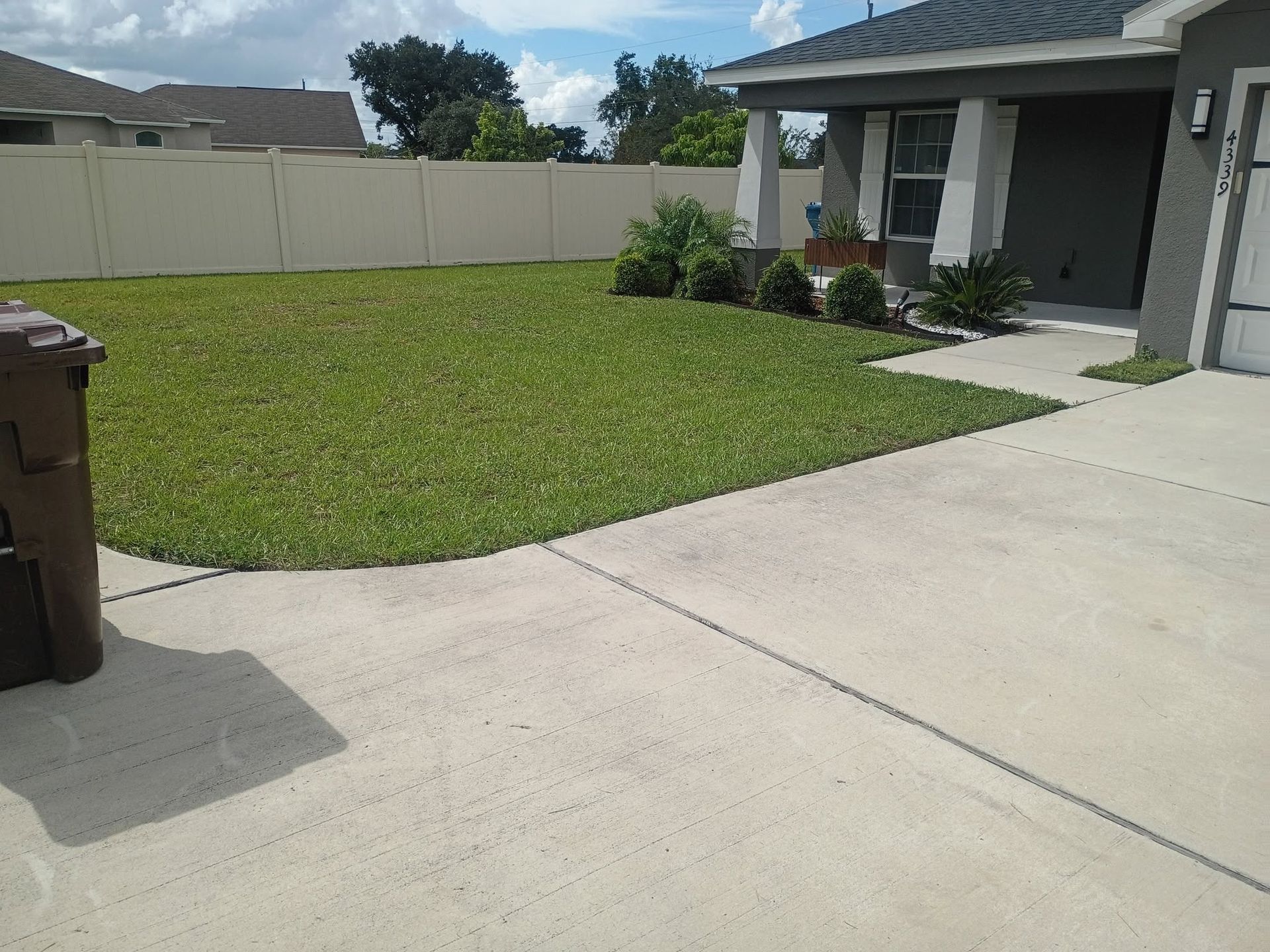
How Mowing and Edging Is Done Correctly
Commercial-grade mowing equipment cuts cleaner than residential push mowers at every pass, but the blade height setting determines whether that clean cut helps the turf or damages it. Grass cut too short loses its ability to shade its own root zone, which accelerates drying and opens the surface to weed pressure. The crew at C & E Landscaping Solutions sets blade height based on the grass type present—not based on what is fastest to cut—and adjusts that setting as the season changes and growth rate shifts.
After a completed service, the visible difference shows up at the edges as much as in the field of the lawn. Clean edging along driveways, bed lines, and walkways is the detail that separates a maintained property from one that was simply cut. Crisp edge lines also prevent turf from creeping into planting beds, which reduces the labor needed to keep beds clean over time.
Routine service frequency—weekly versus biweekly—depends on growth rate and time of year. During the March through October peak window, weekly service prevents the overgrowth that makes scalp-free cutting impossible. Biweekly scheduling works during slower growth periods when cutting the same amount off the blade does not risk removing more than one-third of the leaf blade at once, which is the threshold where scalping begins.
What Property Owners Ask About the Work
The questions below address how mowing and edging services work in practice—what the crew does on site, what decisions affect the outcome, and what a properly finished lawn looks like.
What is the correct mowing height for St. Augustine grass and why does it matter?
St. Augustine should be kept between three and four inches, which is higher than many homeowners expect. Cutting below that range removes the leaf blade where photosynthesis happens and exposes the stolons, leaving the lawn vulnerable to bare patches that take an entire growing season to recover.
How does edging along driveways and beds actually differ from mowing?
Edging uses a vertical blade to cut a defined border between turf and hardscape or planting beds, while mowing uses a horizontal blade to cut the leaf surface. The two tasks require different equipment and different passes, and skipping edging—even with clean mowing—leaves a ragged line that makes the entire lawn look unkempt.
When should clippings be removed versus left on the lawn?
Clippings left in place after a routine cut return nitrogen to the soil and break down quickly when the grass is cut at the right frequency. Clippings should only be removed when the lawn has been allowed to grow too long and the volume of cuttings would smother the turf beneath them.
Why does a missed mowing week in summer cause lasting damage?
Polk County warm-season grasses can grow four to six inches in a single week during peak summer growth. Cutting that much at once means removing far more than one-third of the blade, which triggers a stress response—the lawn thins, the root zone weakens, and bare spots become established before the next cut can address them.
What should a finished edge line look like as a quality indicator?
A correctly edged border shows a clean vertical cut with no turf creeping over the hardscape and no ragged fringe along the bed line. If you can see a defined shadow line between the lawn and the driveway or bed edge, the edging was done with the correct blade angle and pass speed.
C & E Landscaping Solutions also provides
lawn mowing and edging in Auburndale, Winter Haven, Bartow, Haines City, and Davenport. Call (689) 234-8225 to establish a mowing schedule based on your grass type and the current condition of your lawn.