
Sprinkler Repairs That Restore Coverage Without Delays
Irrigation services in Lakeland for broken heads, leaking connections, and zone problems that leave turf sections without water
A lawn section going brown in a straight line or a single zone running continuously when the timer is off are both indicators that the irrigation system has a specific, locatable fault—not a lawn problem. C & E Landscaping Solutions handles irrigation repair in Lakeland and central Polk County, with same-visit turnaround on the minor repairs that account for most service calls: knocked-over heads, leaking zone connections, and heads that no longer rotate or retract correctly. The crew responds within 24 hours during busy season, and diagnosis does not carry a separate charge—the assessment is part of the repair visit.
Central Polk County's low-lying lots have historically shallow irrigation line installations, which means heads are particularly vulnerable to being struck by mowers, edgers, or vehicle tires near driveways. The repair process starts with a zone test to confirm which heads are affected and whether the problem is at the head itself or at the connecting fitting below grade. For a straightforward head replacement or leaking push-fit connection, the part is swapped, the zone is tested under pressure, and the crew confirms coverage before leaving. Larger scope items—broken mainlines, system redesigns, or full zone additions—are assessed on-site and quoted before any work begins.
Call (689) 234-8225 to describe the issue and schedule a visit; the crew will assess the zone, identify the fault, and complete the repair or scope the larger work the same day.
What Irrigation Repair Actually Accomplishes
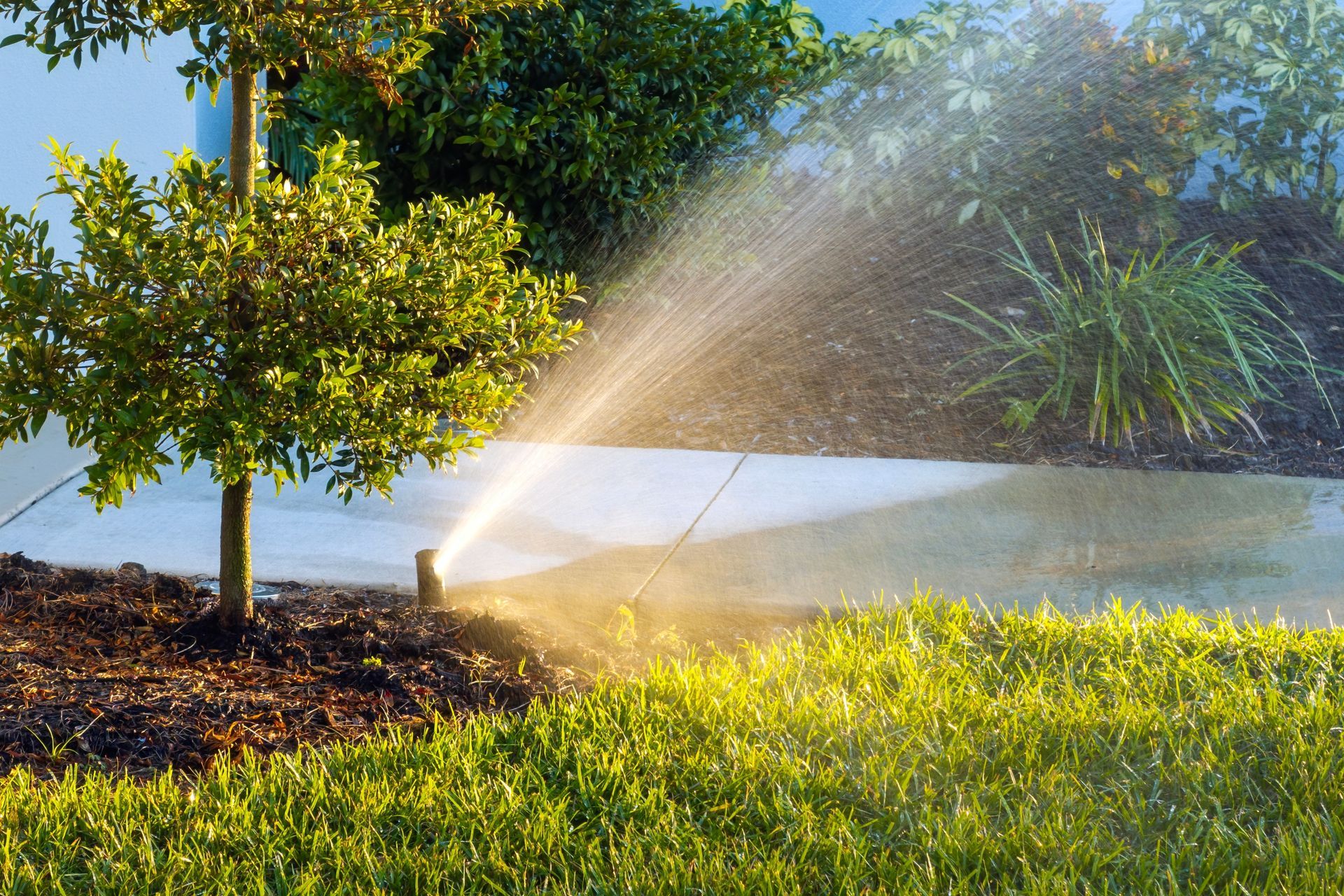
An irrigation system with even one malfunctioning head creates an uneven coverage pattern that is rarely obvious until the turf shows stress. The head that stops rotating covers only a narrow arc instead of its full radius, leaving a dry wedge that looks like a fertilizer burn or a fungal issue before anyone checks the irrigation. C & E Landscaping Solutions tests each affected zone under normal operating pressure after completing repairs, which confirms the coverage pattern is restored rather than simply that the visible damage is fixed.
After a completed repair, what you will notice is that the previously stressed lawn section begins recovering within one to two watering cycles, and the coverage pattern across that zone becomes even again when the system runs. A leaking connection that was pooling water at one point in the bed also stops softening the soil around it, which prevents the sinkhole-style settling that shallow line breaks create in sandy central Florida soil over time.
Minor repairs—single head replacements, leaking fittings, and zone adjustment—are handled in a single visit. Issues that fall outside that scope, such as mainline breaks or a system that has never been zoned correctly for the current planting layout, are assessed on-site and presented as a separate quote before any additional work proceeds. The crew does not begin large-scope work without a confirmed quote, which means you know the full scope of the project before any digging starts.
Questions Before Starting Your Project
The questions below address how irrigation repair works in practice—what the crew does on site, what determines the scope of a repair, and how to recognize when a system is working correctly again.
How does the crew identify which irrigation head or fitting is causing the problem?
The zone is activated under normal operating pressure and each head in the zone is inspected for rotation, retraction, and output volume. A head that does not rise fully, rotate through its arc, or shut off when pressure drops indicates a failure at the head body or the fitting below it, and that narrows the repair to a specific location without requiring excavation of the full line.
What is the difference between a head replacement and a line repair, and why does that matter for scoping?
A head replacement involves removing the damaged riser and head assembly and threading in a new unit without disturbing the line below. A line repair requires excavating to the break, cutting out the damaged section, and splicing in new pipe—a different scope of work that takes longer and requires a separate assessment before a quote can be given.
Why are irrigation heads in central Polk County properties particularly vulnerable to damage?
Many Lakeland-area residential properties were irrigated during the 1980s and 1990s when shallow trench depths were standard. Heads on those systems sit closer to the surface than current installation standards require, which means mower decks, edger wheels, and vehicle tires near driveways strike them more frequently than in areas where deeper trenching was standard practice.
How do you confirm an irrigation zone is functioning correctly after a repair?
The crew runs the repaired zone for a full cycle and watches each head for full rotation through its arc, proper retraction when pressure drops, and the absence of pooling at the connection point underground. A zone that passes all three checks is functioning within normal parameters for that head type.
What should you watch for in the weeks after an irrigation repair to confirm coverage is restored?
The turf section that was previously drying out should show even color recovery within two to three watering cycles. If one section continues to lag, it indicates either a second failing head in the same zone or a coverage gap where the head radius does not overlap with an adjacent head—both of which are identifiable by running the zone during daylight and watching the spray pattern directly.
C & E Landscaping Solutions also provides
irrigation repair in Haines City, Winter Haven, Bartow, Auburndale, and Davenport. To schedule a repair visit or have an issue assessed, call (689) 234-8225 and describe what the system is doing—the crew will confirm what the visit will cover before arrival.