
Consistent Edges and Clean Lines, Every Visit
Lawn trimming and maintenance in Lakeland for residential properties where growth outpaces irregular or infrequent service schedules
Grass in Lakeland's residential neighborhoods grows at a rate that makes irregular service immediately visible—missed edges along driveways thicken within days, and untrimmed perimeters around landscaping beds create a rough boundary that undermines the rest of the yard's appearance. C & E Landscaping Solutions provides weekly and bi-weekly lawn trimming and maintenance for residential properties across central Polk County, with a two-person crew available seven days a week, including nights. That scheduling flexibility is what makes consistent intervals possible even during the weeks when everyone else is calling to catch up after missed service.
Each visit covers string trimming the grass perimeter, cutting around structures and landscaping, and edging along sidewalks and driveways with dedicated edging equipment rather than just angling a trimmer. The distinction matters: edging with proper equipment creates a defined cut line that holds its shape through the next growth cycle, while angled string trimming blurs that line and requires more passes to maintain over time. Debris from the session is removed and the site is cleaned before the crew leaves.
Set up a service interval based on your property's current growth rate and request a walkthrough to confirm what the regular visits will cover.
Why the Trimming Sequence Matters More Than the Mow
Most homeowners focus on how short the grass is cut, but the trimming and edging work around the perimeter is what defines how the yard reads from the street or a neighbor's sightline. C & E Landscaping Solutions sequences the work so trimming and edging happens in coordination with the mow rather than as an afterthought, which means the clippings generated by trimming don't get left under shrubs or pushed against structures where they mat and create moisture problems at the base of landscaping.
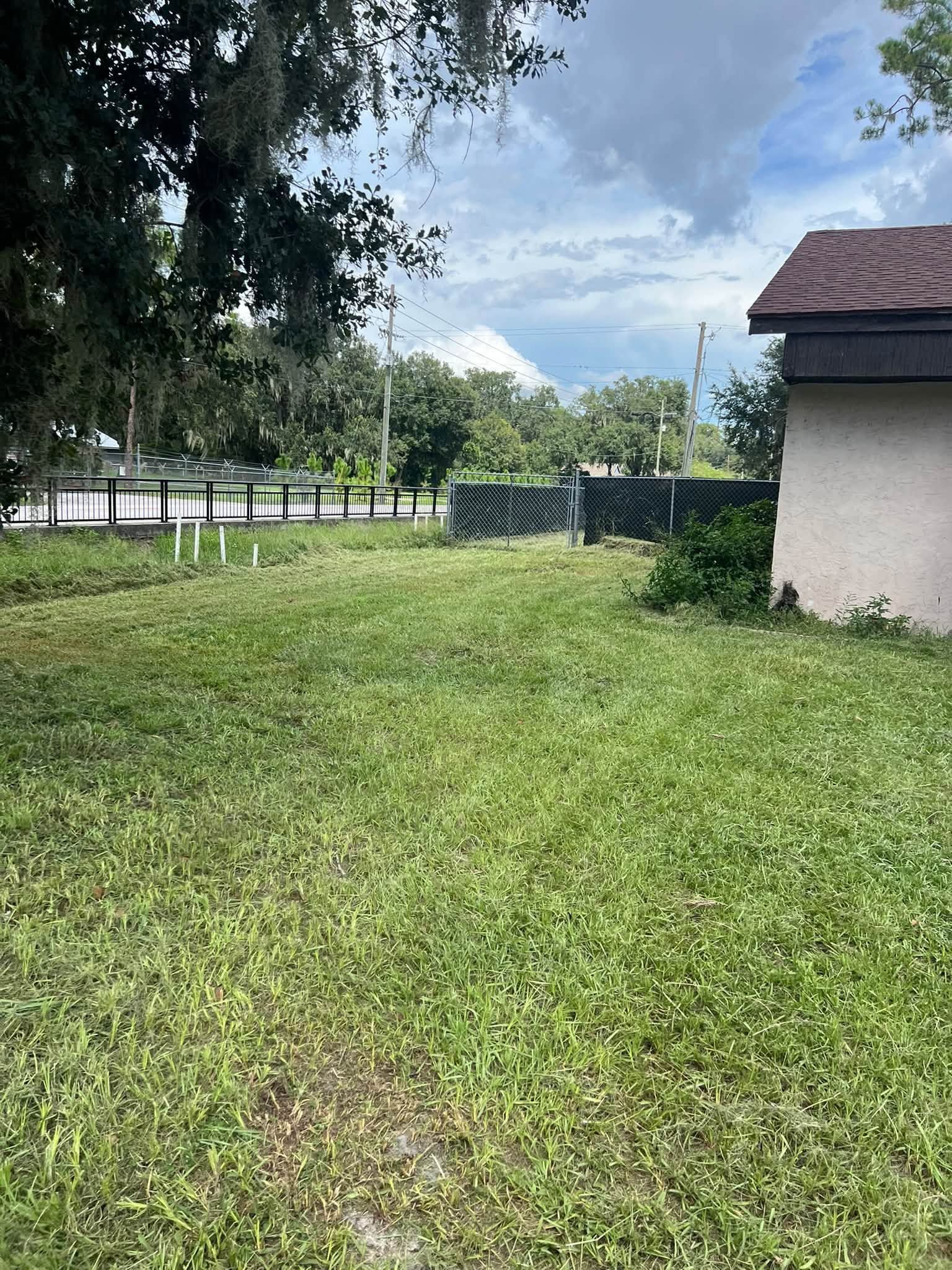
After a visit, the change you notice is a clean separation between turf and hardscape—driveways and sidewalks have a defined edge rather than grass creeping over the concrete, and the boundary between lawn and bed stays sharp enough that it looks maintained rather than managing itself. That consistency across visits is what prevents overgrowth from becoming a restoration project.
Customers set the service frequency—weekly or bi-weekly—based on how quickly their grass grows and how they prefer the yard to look between visits. Properties with more landscaping detail, such as multiple bed borders or structures close to the turf edge, typically benefit from weekly visits because the trimming complexity per visit is higher and growth around those features becomes visible faster.
Answers About How Lawn Trimming Gets Done
The following questions address the trimming and maintenance process itself—what equipment is used, how the schedule works, and what you can expect the yard to look like once each visit is complete.
What is the difference between string trimming and edging, and why does it matter?
String trimming cuts the grass length around perimeters, while edging uses a blade or wheel to cut a defined vertical line where turf meets hardscape—proper edging holds its shape through the next growth cycle rather than requiring re-establishment each visit.
How should you choose between weekly and bi-weekly service intervals?
Weekly service makes sense when your yard has multiple bed borders, structures close to the turf, or faster growth that makes the edge visible within four to five days; bi-weekly works well for properties where the primary concern is overall height rather than perimeter detail.
What does the crew do with trimming debris and clippings after the visit?
Debris from trimming and edging is collected and removed from the site before the crew leaves, so clippings don't mat against foundation edges or blow onto hardscape between visits.
How does the equipment setup change for properties with landscaping beds versus open turf?
Properties with multiple bed borders require repositioning string trimmer angles more frequently and use slower passes around bed edges to avoid cutting into mulch or disturbing plants, which adds time compared to open turf with a single perimeter run.
What should be in place before the first maintenance visit to make the service effective?
If the lawn has significant overgrowth or debris from previous neglect, a cleanup pass before the first maintenance visit allows the trimming equipment to work at the right height rather than working through multiple inches of excess growth that slows the process and affects cut quality.
C & E Landscaping Solutions also provides
lawn trimming and maintenance in Auburndale, Winter Haven, Bartow, Haines City, and Davenport. Call (689) 234-8225 to establish a service interval and get your first visit scheduled.